

A service cart is a core piece of equipment in foodservice operations where materials, food, or tableware must move efficiently between stations. In commercial kitchens, hotels, catering environments, and institutional dining facilities, the right service cart supports workflow continuity, reduces physical strain on staff, and helps maintain hygiene standards. Selecting the wrong cart often leads to congestion, safety risks, and premature replacement, especially under high daily usage.
Rather than focusing on appearance or price alone, professional buyers evaluate service carts based on how well they perform under real operating conditions.
Understanding Operational Requirements Before Selection
Service carts are used in different ways depending on the operation. Some are dedicated to transporting plated meals or food pans, while others support dish clearing, ingredient movement, or restocking buffet lines. The volume moved per hour, the distance between stations, and the type of load all influence cart requirements.
A cart that works well for light tray service may fail quickly when used for heavy pans or stacked dishware. Clarifying the primary task of the cart is the first step in selecting a durable and efficient solution.
Material Choice And Structural Stability
Material selection directly affects durability, hygiene, and long-term cost. In foodservice environments where moisture, detergents, and temperature changes are constant, structural stability is essential.
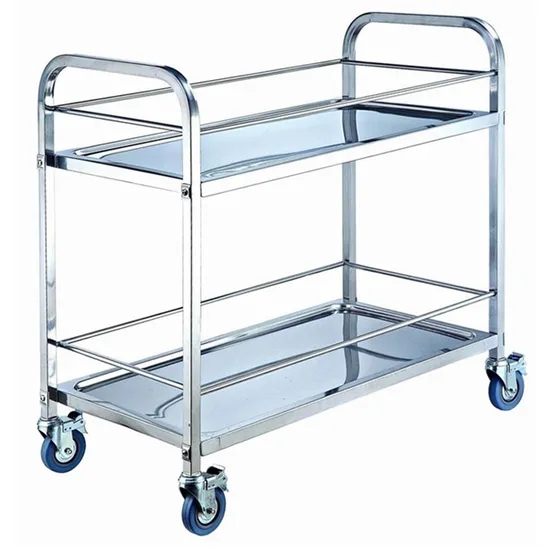
Stainless steel service carts are widely used because they resist corrosion, tolerate frequent cleaning, and maintain rigidity under load. Their surfaces do not absorb moisture or odors, making them easier to sanitize consistently. Plastic carts can be suitable for lighter-duty or front-of-house use where noise reduction and lower weight are priorities, but they may not provide the same load stability over extended use.
For operations expecting continuous movement of heavy items, stainless steel construction offers more predictable performance and longer service life.
Shelf Capacity And Functional Layout
Shelf design determines how safely and efficiently items can be transported. Load capacity must be evaluated not only in total weight, but also per shelf. Overloaded or unevenly loaded shelves lead to flexing, instability, and increased risk of tipping.
Spacing between shelves should reflect the actual height of trays, pans, or containers used in daily service. Inadequate spacing often causes staff to overload a single tier, increasing strain and reducing control during movement. The number of tiers should balance capacity with maneuverability, as additional shelves increase weight and resistance when pushing.
A well-designed shelf layout supports smooth loading, stable transport, and fast unloading without forcing workarounds.
Wheel Performance And Control In Real Kitchens
Caster quality has a direct impact on how a service cart performs during busy service periods. Smooth movement reduces physical effort and improves safety, particularly in kitchens with tight corners or uneven flooring.
High-quality casters roll consistently under load and maintain control during direction changes. Locking mechanisms are essential when carts are stationary for loading, unloading, or staging. Without reliable locks, carts may shift unexpectedly, increasing the risk of spills or injury.
Selecting wheels suited to the actual floor surface and traffic pattern ensures predictable movement and reduces wear on both the cart and the facility.
Safety, Ergonomics, And Daily Use
Service carts are handled repeatedly throughout each shift, often under time pressure. Ergonomic considerations influence both efficiency and injury prevention.
Handle height and grip shape should allow comfortable pushing and pulling without forcing awkward posture. Balanced weight distribution helps maintain control, especially when carts are fully loaded. Raised shelf edges reduce the likelihood of items sliding during movement, particularly when navigating ramps or thresholds.
Design choices that reduce strain and stabilize loads contribute to smoother service and lower staff fatigue over time.
Hygiene Compatibility And Cleaning Efficiency
Foodservice carts must integrate seamlessly with established sanitation routines. Smooth surfaces, minimal crevices, and well-finished joints allow quick cleaning and drying between uses.
Stainless steel carts perform well under frequent washing and chemical sanitization without degrading. Designs that avoid deep seams or exposed fasteners reduce the risk of residue buildup and moisture retention. A cart that is difficult to clean often becomes a hygiene liability, regardless of its structural strength.
Ease of cleaning is therefore a functional requirement, not an optional feature.
Matching Cart Design To Workflow
The effectiveness of a service cart depends on how closely it matches the intended workflow. Carts used for serving benefit from open access and controlled shelf spacing, while clearing carts require higher load tolerance and stability. Prep and ingredient transport may require adjustable configurations or compatibility with standardized containers.
When carts are mismatched to their tasks, staff compensate through overloading or improper use, which accelerates wear and increases risk.
Long-Term Value And Standardization Considerations
In professional operations, value is measured over time. A service cart that maintains stability, cleans easily, and performs consistently across shifts reduces replacement cycles and training variation.
For operations with multiple locations or standardized layouts, consistent cart specifications simplify procurement and workflow management. Customization options such as shelf spacing, load ratings, or handle configuration can support uniform performance at scale.
Conclusion
Selecting the right service cart for foodservice operations requires evaluating how the cart will function under real working conditions. Material durability, shelf configuration, wheel performance, hygiene compatibility, and ergonomic design all contribute to long-term performance. A well-chosen service cart improves efficiency, reduces staff strain, and supports consistent service quality.
For foodservice operations sourcing service carts for long-term use or standardized deployment, Yonghao Hardware provides professional-grade solutions with OEM customization options. By aligning cart design with workflow requirements, operations can achieve safer, more efficient material handling throughout daily service.