

Chafing dishes and steam tables are both used to keep food warm during service, but they are designed for different service formats, operating conditions, and usage intensity. Confusing the two often leads to improper equipment selection, unstable food temperatures, or inefficient buffet layouts. Understanding the functional difference between a chafing dish and a steam table helps operators choose the right solution for their specific foodservice environment.
Rather than focusing on appearance, the key difference lies in heat source, structure, capacity, and intended duration of service.
The Fundamental Difference In Purpose
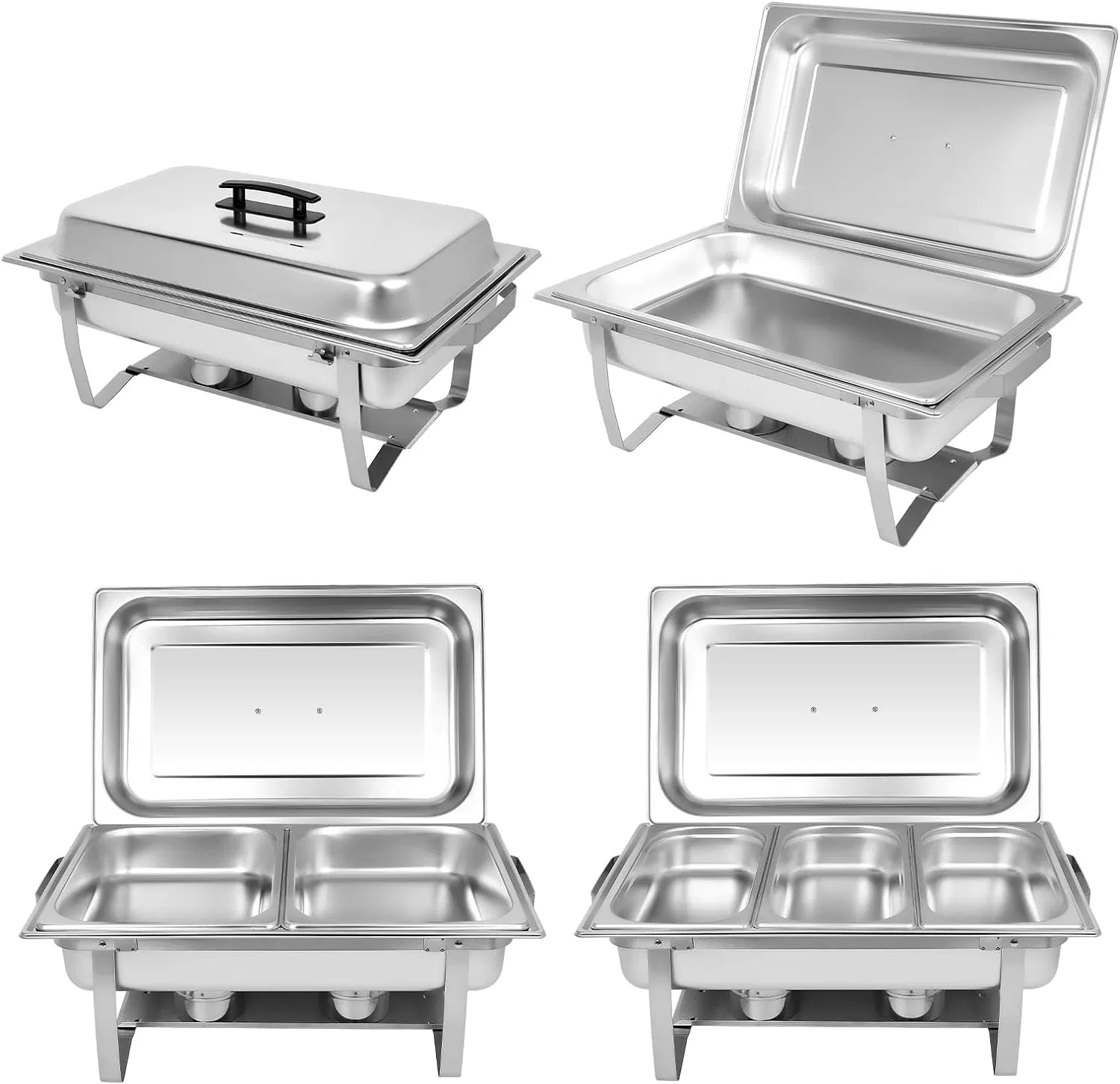
A chafing dish is designed for temporary food holding and presentation, typically in buffet lines, banquets, catering events, and mobile service setups. It prioritizes portability, ease of setup, and visual presentation.
A steam table is designed for continuous food holding in fixed service lines, such as cafeterias, institutional dining, and high-volume foodservice operations. It prioritizes temperature stability, capacity, and long operating hours.
Both keep food warm, but they solve different operational problems.
Heat Source And Temperature Control
The most critical difference between the two is how heat is generated and controlled.
Chafing dishes rely on external, self-contained heat sources, most commonly gel fuel or wick fuel placed beneath the food pan. Heat output is limited and manually controlled by adjusting the number of fuel cans or their placement. Because the heat source is open and indirect, temperature control is approximate rather than precise.
Steam tables use built-in heating systems, typically electric elements or gas burners, combined with a water bath. The water produces steam that transfers heat evenly to the food pans. Temperature is regulated through thermostats or control valves, allowing consistent holding temperatures over long periods.
In practical terms, chafing dishes are suited for moderate heat holding, while steam tables support stable, regulated heat for extended service.
Structural Design And Installation
Chafing dishes are standalone units. They can be placed on tables, buffet risers, or temporary service lines without permanent installation. Their structure usually consists of a frame, fuel holders, a water pan, and a food pan, often topped with a lid for heat retention.
Steam tables are built as fixed or semi-fixed equipment. They are often integrated into counters, serving lines, or kitchen layouts. Steam tables require access to power or gas and are not intended to be moved once installed.
This structural difference makes chafing dishes ideal for flexible setups and steam tables suitable for permanent foodservice environments.
Capacity And Service Volume
Chafing dishes typically hold one standard food pan per unit. They are designed for controlled portions and moderate turnover. When food runs low, the pan is replaced or refilled, and service continues without heavy batch handling.
Steam tables support multiple food pans simultaneously, often arranged in a linear or modular configuration. This allows higher food volume, faster replenishment, and simultaneous service of multiple dishes.
For high-traffic environments, steam tables reduce service bottlenecks by handling larger quantities at once.
Duration Of Use And Operating Time
Chafing dishes are best suited for short to medium service durations, such as events lasting several hours. Fuel must be monitored and replaced as it burns out, which limits unattended operation time.
Steam tables are designed for long, continuous operation, often running for an entire service day. As long as power, gas, and water levels are maintained, they can hold food at safe temperatures with minimal interruption.
This difference makes steam tables more suitable for daily institutional service, while chafing dishes excel in event-based or mobile scenarios.
Food Presentation And Guest Interaction
Chafing dishes are often chosen for their appearance. Polished finishes, roll-top lids, and symmetrical layouts enhance buffet presentation and guest experience. The equipment is visible to guests and contributes to the overall aesthetic of the service.
Steam tables are primarily functional. They are usually positioned behind serving counters or in staff-managed service lines. While clean and professional, they are not designed as presentation pieces.
When guest-facing presentation is a priority, chafing dishes are generally preferred.
Cleaning And Maintenance Considerations
Chafing dishes require regular cleaning of frames, pans, and lids, as well as safe disposal of used fuel. Because they are portable, cleaning is often done manually after service.
Steam tables require routine maintenance of heating elements, water reservoirs, and temperature controls. Cleaning is integrated into daily kitchen sanitation routines and may involve draining water baths and wiping fixed surfaces.
Maintenance complexity is higher for steam tables, but this is balanced by their long-term stability and capacity.
Typical Use Scenarios
Chafing dishes are commonly used in:
- Hotel buffets and banquets
- Catering events and weddings
- Mobile foodservice setups
- Temporary buffet lines
Steam tables are commonly used in:
- Cafeterias and canteens
- Institutional dining facilities
- Commercial kitchens with continuous service
- Self-service or staff-served food lines
Choosing based on service scenario prevents misuse and inefficiency.
Conclusion
The difference between a chafing dish and a steam table lies in their intended use, heat source, structure, and service duration. Chafing dishes provide flexible, portable food holding with an emphasis on presentation and short-term service. Steam tables deliver stable, controlled heat for high-volume, long-duration foodservice operations in fixed environments.
Selecting the right equipment depends on how food is served, how long it must be held, and the level of temperature control required. For buffet setups, catering projects, or operations sourcing food holding solutions in bulk, Yonghao Hardware supports professional-grade chafing dish systems and compatible food pans with OEM options tailored to real service requirements.