

Commercial kitchen utensils are selected differently than household tools because they face higher heat, heavier loads, faster turnaround, and stricter hygiene routines. The best material is the one that stays stable under repeated use, cleans predictably, and resists corrosion and deformation over time. In real kitchens, utensil material affects food safety, service speed, replacement frequency, and even labor cost because tools that warp, chip, or trap residue create extra work and risk.
This guide explains the most reliable materials for commercial kitchen utensils, what each material does well, where it tends to fail, and how to choose the right combination for prep, cooking, frying, draining, holding, and service.
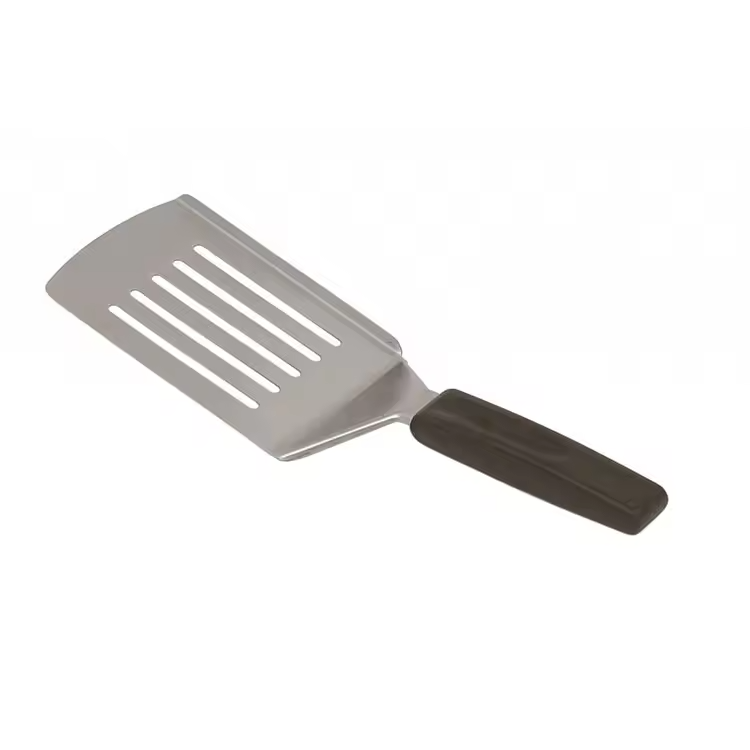
What Commercial Kitchens Need From Utensil Materials
Before comparing materials, it helps to define what a durable commercial kitchen utensil must handle in daily operations:
- Heat exposure from boiling liquids, hot oil, steam tables, and warming equipment
- Chemical exposure from detergents, sanitizers, and high-temperature dishwashing
- Mechanical stress from stirring, lifting, draining, and stacking
- Hygiene control with smooth surfaces that do not trap residue
- Consistent performance across multiple stations and shifts
A material that performs well in one area but fails in another can create hidden costs, especially in high-volume kitchens.
Stainless Steel Is The Workhorse For Most Commercial Utensils
Stainless steel is the most widely used material for professional utensils because it is strong, heat stable, and easy to sanitize. It performs well in prep tools, skimmers, spider strainers, ladles, tongs, fryer baskets, and serving components used near heat and steam.
Why stainless steel is preferred:
- High heat resistance without softening or deforming
- Strong corrosion resistance when properly maintained
- Non-porous surface that supports hygienic cleaning
- Good strength-to-weight balance for lifting and draining tasks
Where it matters most:
- Frying and draining tools such as baskets and skimmers
- Hot holding and buffet service tools that stay near steam and heat
- Utensils that are washed frequently and need long service life
For many foodservice operations, stainless steel is the base material used to build a consistent tool set across stations.
Aluminum Works For Heat Transfer But Has Limits In Durability
Aluminum is valued for fast heat transfer and low weight. It is common in cookware, sheet pans, and some specialty tools. For utensils, aluminum is less common because it is softer than stainless steel and can dent or deform under heavy use.
Strengths of aluminum:
- Lightweight handling for large-format equipment
- Efficient heat response in cookware applications
- Cost-efficient for certain high-volume use cases
Limitations in utensil applications:
- Softer surface can scratch and deform under impact
- May react with certain acidic foods if not properly coated
- Surface can stain or discolor with harsh chemicals
Aluminum can be useful in specific environments, but kitchens that prioritize longevity often reserve it for cookware rather than core utensils.
Food-Grade Plastics Support Cold Prep And Organisation
Food-grade plastics are widely used for prep containers, ingredient bins, and some cold-prep utensils where visibility, light weight, and quick handling are important. For hot contact, plastics must be selected carefully because heat tolerance varies by resin type.
Where plastics perform well:
- Cold prep, storage, and staging areas
- Fast identification of contents when transparency is needed
- Lightweight handling for frequent refills and line organization
Where plastics are not ideal:
- Direct contact with hot oil or boiling liquids
- Prolonged exposure to high-temperature dishwashers without rated performance
- High-impact tasks where cracking can occur over time
In practice, plastics are often paired with stainless steel tools so each material is used within its best working range.
Silicone Is Best As A Heat-Resistant Contact Surface
Food-grade silicone is commonly used for spatulas, scrapers, and contact edges because it resists heat and protects surfaces. In commercial use, silicone often works best as a functional tip or head combined with a rigid handle.
Advantages of silicone:
- Heat resistance suitable for hot mixing and scraping tasks
- Flexible edge that reduces residue and improves bowl and pan cleaning
- Non-abrasive contact that protects nonstick coatings
Selection cautions:
- Choose molded, food-grade silicone designed for repeated commercial cycles
- Inspect regularly for tearing at thin edges
- Prefer reinforced internal cores for shape stability
Silicone tools are most effective when the design prevents twisting and keeps the working edge stable.
Nylon Is Common For Nonstick Compatibility With Moderate Heat
Heat-resistant nylon is frequently used for ladles, turners, and spoons that must protect nonstick cookware. It is typically not used for high-heat frying contact, but it performs well in controlled temperature ranges.
Benefits of nylon tools:
- Non-scratch performance on coated cookware
- Lightweight and comfortable for continuous line work
- Cost-effective for large kitchen tool sets
Limitations:
- Heat limits mean it can soften if left in hot pans or near open flames
- Edges may wear or roughen with aggressive cleaning
- Not ideal for direct fryer contact
Nylon is most suitable for stations where cookware protection matters and temperatures are managed.
Wood Has A Narrow Role In Commercial Kitchens
Wood is used in some traditional prep and stirring tasks, but it is not the default choice for commercial utensils because it is porous and can absorb moisture and residue. Some kitchens use wood in controlled applications, but it requires stricter maintenance routines.
Where wood can work:
- Specific prep traditions and controlled dry applications
- Tasks where gentle contact is needed on delicate surfaces
Where wood creates risk:
- Moisture absorption can support odor and residue retention
- Harder to sanitize consistently compared with stainless steel
- Faster wear in high-temperature wash cycles
For kitchens built around standard sanitation workflows, stainless steel and certified food-grade polymers are usually easier to manage.
Quick Comparison Table For Material Selection
| Material | Best For | Key Strength | Main Limitation |
|---|---|---|---|
| Stainless steel | Frying, draining, hot service, general tools | Heat stability and hygiene | Higher initial cost than basic plastics |
| Aluminum | Cookware and heat-response equipment | Light weight and heat transfer | Softer and less durable for utensils |
| Food-grade plastics | Cold prep and storage tools | Light handling and visibility | Limited heat tolerance by resin |
| Silicone | Scrapers and spatulas | Flexible, heat-resistant contact | Can tear without reinforcement |
| Heat-resistant nylon | Nonstick-safe ladles and turners | Protects coatings | Softening risk at higher heat |
| Wood | Limited traditional tasks | Gentle contact | Porosity and sanitizing difficulty |
How To Choose Materials By Station
A practical way to select materials is to match them to where the tool lives:
- Fry station: stainless steel tools and baskets that tolerate hot oil and fast cleaning
- Hot holding and buffet: stainless steel serving tools that resist steam, corrosion, and repeated handling
- Prep and cold line: food-grade plastic containers and tools where speed and visibility matter
- Nonstick cookware line: nylon or silicone heads to protect coatings
- Mixing and scraping: silicone with reinforced cores for stable performance
This station-based approach reduces premature wear and improves consistency across shifts.
Conclusion
The best materials for commercial kitchen utensils are chosen for stability, sanitation, and long service life. Stainless steel remains the most reliable all-purpose option for high-heat and high-wear tools, while silicone and heat-resistant nylon serve specific roles where flexibility or nonstick protection matters. Food-grade plastics are valuable in cold prep and organization, and aluminum and wood are best used selectively based on workflow and hygiene control.
If you are standardizing a utensil set for ongoing operations or planning a bulk order for long-term service use, Yonghao Hardware can support OEM customization for specifications, packaging, and project-ready configurations. Share your usage station, cleaning method, and target lifespan, and we can recommend a material and product combination that fits your operating model.