

A fryer basket is one of the most heavily used tools in a commercial kitchen. It is exposed to high temperatures, hot oil, starch, batter residue, and repeated washing cycles every day. If cleaning and maintenance are not handled correctly, residue builds up quickly, oil degrades faster, and the basket itself can warp, weaken, or fail earlier than expected. Proper care is not about appearance alone, but about frying performance, food safety, and equipment lifespan.
This article focuses only on the essential, practical steps professional kitchens should follow to clean and maintain fryer baskets correctly, without unnecessary detours.
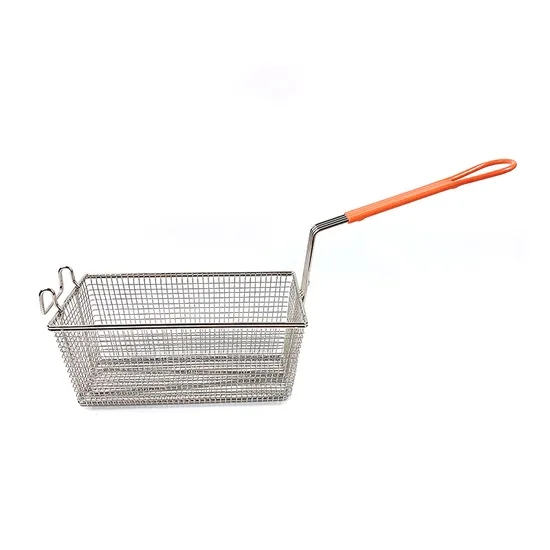
Why Fryer Basket Cleaning Directly Affects Frying Performance
During frying, oil polymers, breading particles, and protein residue adhere to the wire mesh. When this buildup hardens, it blocks oil flow around the food. The result is uneven frying, darker oil, slower recovery time, and increased oil carryover onto finished products.
A clean fryer basket allows:
- Faster oil drainage after lifting food
- More even heat contact during frying
- Reduced oil contamination from burnt residue
- Consistent texture and color in fried items
In high-volume kitchens, neglecting basket cleaning often shortens oil life and increases replacement frequency for both oil and baskets.
Daily Cleaning: The Minimum Standard
For most commercial operations, fryer baskets should be cleaned at the end of every service day.
Correct Daily Cleaning Process
-
Allow the basket to cool slightly
The basket should still be warm, not cold. Warm residue releases more easily than fully hardened grease. -
Rinse with hot water
Hot water flushes loose oil and food particles from the mesh and joints. -
Apply a foodservice-approved degreaser
Use a detergent designed for fryer equipment. Avoid overly aggressive chemicals that attack metal surfaces. -
Scrub with a soft or medium nylon brush
Focus on wire intersections, corners, and the bottom curve where residue accumulates. Do not use steel wool, which can damage the wire surface. -
Rinse thoroughly
Detergent residue left on the basket can burn during the next use and affect oil quality. -
Air dry completely
Moisture trapped in joints accelerates corrosion and creates odor issues.
This daily routine prevents hard carbon buildup and keeps the basket performing consistently.
Deep Cleaning For Heavy Buildup
In kitchens that fry breaded or sugary products, daily cleaning may not be enough. A scheduled deep clean is necessary to remove carbonized residue.
When Deep Cleaning Is Needed
- Visible dark buildup on wire mesh
- Slower oil drainage after lifting food
- Sticky or rough wire surfaces after washing
- Uneven frying results despite fresh oil
Controlled Soaking Method
- Prepare a hot water bath with fryer-safe degreaser
- Fully submerge the basket
- Soak for 15 to 30 minutes, depending on buildup
- Scrub lightly with a nylon brush
- Rinse thoroughly with hot water
- Dry completely before reuse
Over-soaking or overnight soaking should be avoided, as prolonged chemical exposure can weaken weld points and wire integrity.
Using Dishwashers: What Works And What Does Not
Many commercial kitchens use dishwashers for fryer baskets, but only under controlled conditions.
Dishwasher use is appropriate when:
- The basket is stainless steel
- Detergents are non-corrosive
- Baskets are positioned to avoid impact with other items
Dishwashers are not ideal if:
- Baskets knock against racks or other metal tools
- Harsh alkaline detergents are used repeatedly
- Cycles exceed recommended temperatures for the basket material
Even when dishwashers are used, periodic manual inspection is still required.
Maintenance Checks During Cleaning
Cleaning time is also inspection time. Fryer baskets should be checked regularly for early signs of failure.
Key points to inspect:
- Loose or broken wires
- Deformed frames that no longer sit flat in the fryer
- Cracks or weakness at weld joints
- Handle insulation wear or looseness
A basket that no longer sits evenly in the fryer can affect oil circulation and create safety risks.
What Shortens Fryer Basket Lifespan
Several common practices reduce basket durability significantly:
- Leaving baskets soaking in degreaser overnight
- Using chlorine-based cleaners on stainless steel
- Scraping with metal tools to remove buildup
- Storing baskets while still wet
- Dropping baskets onto hard surfaces after washing
Avoiding these habits can extend usable life and reduce replacement cost.
Storage Between Uses
Proper storage helps maintain basket shape and cleanliness.
Best practices:
- Hang baskets or store them upright to prevent frame bending
- Keep baskets dry and away from standing water
- Avoid stacking in a way that compresses wire mesh
Well-stored baskets retain their shape and drain more effectively during use.
Cleaning Frequency Based On Usage Level
| Fryer Usage Level | Cleaning Requirement |
|---|---|
| Light use | Daily cleaning |
| Medium use | Daily cleaning + weekly deep clean |
| Heavy use | Daily cleaning + frequent deep cleaning |
| Continuous service | Multiple cleanings per shift |
Adjusting frequency to actual usage prevents extreme buildup and reduces labor spikes.
Conclusion
Proper cleaning and maintenance of fryer baskets are essential for consistent frying results, oil efficiency, and equipment longevity. Daily cleaning removes fresh residue before it hardens, while scheduled deep cleaning prevents carbon buildup that affects performance. Gentle tools, appropriate detergents, and complete drying protect the wire structure and weld points from premature damage.
For kitchens managing high frying volume or sourcing baskets for long-term use, Yonghao Hardware supports stable manufacturing and OEM options designed to withstand repeated cleaning cycles and heavy daily operation. By pairing the right basket design with correct maintenance practices, kitchens can achieve safer, cleaner, and more consistent frying performance.