

A full size steam table pan usually means a 1/1 GN pan, the standard full-size footprint used in buffet lines, hotel banquets, catering stations, and commercial foodservice holding units. The number of servings you can get from a full size pan is not a fixed number, because it depends on three practical factors: pan depth, the food type, and the portion size you plan to serve. Once you match those three inputs, you can estimate servings reliably for staffing, purchasing, and refill timing.
In real operations, a full size pan is most often used for hot holding and service during peak periods, because it fits standard steam tables and buffet wells and supports fast replacement when you keep multiple pans staged in the back.
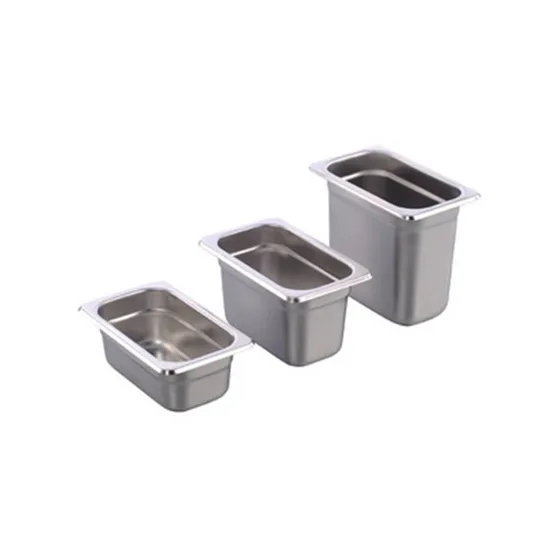
What Counts As A Full Size Steam Table Pan
A full size steam table pan is the largest common pan footprint in steam tables. In GN terms, it is typically the 1/1 GN format. The top opening is approximately 530 x 325 mm, and the depth varies by model. Common depths include 65 mm, 100 mm, 150 mm, and 200 mm.
Depth matters as much as the top size. A shallow pan may look full, but it holds less volume and usually needs more frequent refills. A deeper pan holds more, but can increase heating time and may affect food quality if the product sits too long.
The Simple Serving Formula For Planning
To estimate servings, use a volume-based approach:
- Step 1: Estimate usable pan volume based on depth
- Step 2: Adjust for the food type and headspace
- Step 3: Divide by your planned portion size
In service, most kitchens do not fill pans to the brim. Typical fill level is about 80% to reduce spill risk and to maintain safer handling and more even temperature holding. For many foods, that 80% rule gives a more realistic servings estimate than a theoretical maximum.
Approximate Capacity And Servings By Pan Depth
The table below uses practical planning assumptions:
- Full size pan footprint as 1/1 GN
- Usable fill level around 80%
- Portions shown in fluid ounces for soups and sauces, and by weight or scoop count for solids
| Full Size Pan Depth | Practical Usable Volume | Soup 8 oz Portions | Sauce 2 oz Portions | Solid Side 6 oz Portions |
|---|---|---|---|---|
| 65 mm | about 9–10 L | 38–42 | 150–170 | 55–65 |
| 100 mm | about 14–15 L | 58–64 | 230–260 | 85–100 |
| 150 mm | about 21–23 L | 88–98 | 350–400 | 125–155 |
| 200 mm | about 28–30 L | 118–128 | 470–520 | 170–210 |
How to read this table correctly:
- Liquids are easiest to estimate because they pack consistently
- Solids vary more because air gaps and serving style change the yield
- The same pan can serve fewer portions if you choose larger scoops for premium buffets
How Food Type Changes The Serving Count
Food density and shape directly impact servings. Two pans with the same volume can produce very different portion counts when the product behaves differently in the pan.
Liquids and semi-liquids:
- Soups, gravies, curry, and chili usually deliver stable portion counts
- Portion prediction is most accurate when ladle sizes are standardized
- Higher viscosity foods serve more consistently because they do not splash or settle as quickly
Loose solids:
- Rice, pasta, roasted vegetables, and sautéed greens contain air gaps
- Portions depend heavily on how firmly staff packs the scoop
- This category often needs a safety buffer in planning, especially for high-traffic lines
Large pieces:
- Chicken parts, ribs, fish fillets, and pastries are counted by pieces instead of volume
- Servings depend on piece size and spacing
- This is where pan layout matters more than depth
Typical Serving Scenarios In Catering And Buffet Service
If you want a quick planning shortcut, use the scenarios below as realistic starting points. These assume normal buffet behavior and standard portion tools.
- Full size 100 mm pan of soup with an 8 oz ladle often covers roughly 60 portions in a single pan.
- Full size 100 mm pan of mashed potatoes served with a 6 oz scoop often lands around 90 portions, but can drop if guests self-serve heavy.
- Full size 150 mm pan of pasta can support over 120 portions when staff fluffs and refills correctly, but fewer if sauce is thick and portions are larger.
- Full size 65 mm pan is better for fast-turn items or premium dishes where freshness matters more than maximum holding volume.
These are planning numbers, not guarantees. If your event has long service windows, it is often better to run multiple smaller refills using medium-depth pans rather than one very deep pan that holds food too long.
Pan Depth Selection For Better Yield And Food Quality
Depth is not only about how many portions you can serve. It also influences holding performance.
- 65 mm pans are good for quick rotation and for items that degrade with time, such as fries, crispy foods, and delicate vegetables.
- 100 mm pans are the most versatile for buffet staples, balancing capacity with manageable heat recovery.
- 150 mm and 200 mm pans are best for high-volume staples where consistent temperature and steady demand justify larger batch holding.
If the goal is to reduce refill labor, deeper pans help. If the goal is to improve appearance and freshness, shallower pans with more frequent replacements often perform better.
Tools And Habits That Improve Serving Accuracy
Serving estimates become reliable when your service line is standardized. A few operational habits make a large difference:
- Use consistent ladles and scoops, labeled by size
- Train staff to level portions rather than heaping
- Maintain headspace in the pan so refills are safe and clean
- Track actual consumption by event type and adjust the next plan
- Stage backup pans in the same GN size so changeovers are fast
For project planning, standardizing to GN pans across stations also reduces complexity. Many buyers choose a consistent set of full size stainless steel steam table pans so they can interchange lids, perforated options, and accessories without mismatch.
What To Specify When Ordering Full Size Steam Table Pans
For bulk procurement, include these specifications to avoid confusion:
- GN size: confirm full size 1/1 format
- Depth: 65, 100, 150, or 200 mm based on service plan
- Material: stainless steel for hot holding is a common default
- Finish and edge design: stronger rims improve service life and fit
- Lid requirement: solid lid or not, depending on holding method
- Perforated or solid: perforated for steaming and draining workflows
Conclusion
A full size steam table pan can serve a wide range of portion counts because depth, food type, and portion size determine the yield. As a practical reference, a full size 100 mm pan commonly supports about 60 servings of 8 oz soup or around 85–100 servings of a 6 oz solid side, while deeper pans scale up accordingly. The most reliable way to plan is to standardize your ladles or scoops and use an 80% fill rule to reflect real service conditions.
If you are unsure which depth and configuration best matches your buffet line or catering workflow, Yonghao Hardware can help you select the right full size pan set for your equipment layout. Share your serving style, menu type, and target portion size, and we can support OEM customization for dimensions, packaging, and bulk order requirements.