

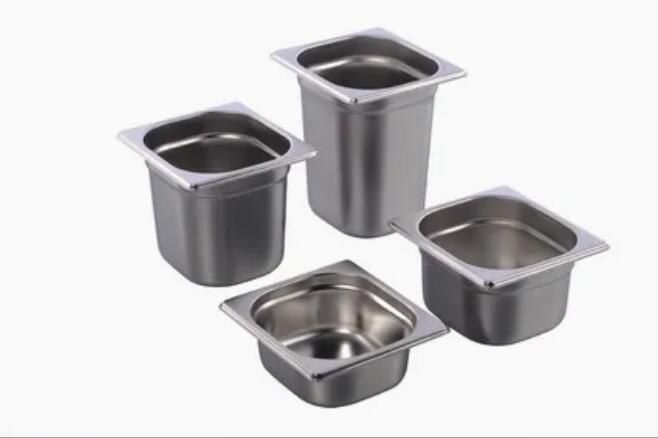
A gastronorm pan, often called a GN pan, is a standardized food container used in professional kitchens to store, prep, cook, chill, transport, and serve food using the same footprint. The key idea is interchangeability: one pan size fits multiple types of equipment such as steam tables, warming units, prep counters, refrigerated wells, combi ovens, and buffet lines. Because the dimensions follow an international sizing system, operators can swap pans across stations without re-measuring or reconfiguring the layout, which improves speed, portion control, and food safety consistency.
Gastronorm pans are typically made from stainless steel, polycarbonate, or polypropylene. For hot holding and cooking, stainless steel is widely used due to heat resistance, durability, and hygiene performance. For cold storage and ingredient visibility, clear plastic pans are common, depending on temperature limits and kitchen rules.
The Gastronorm Standard And Why It Matters
Gastronorm sizing is based on a modular format that lets different pan sizes combine neatly in the same frame. For example, two 1/2 GN pans match the footprint of one 1/1 GN pan, and four 1/4 GN pans also match that same footprint. This modular logic is what makes GN systems so efficient in high-volume operations.
What the standard helps you achieve:
- Faster line setup and refills because pans fit the same rails and cutouts
- More accurate capacity planning because sizes are consistent across suppliers
- Cleaner workflow between prep, storage, cooking, and service
- Lower replacement risk because GN pans are widely available in the global market
Common GN Pan Sizes You Will See Most Often
The reference size is 1/1 GN. Other sizes are fractions of 1/1 GN and are designed to combine with no wasted space.
| GN Size | Approximate Top Size mm | Typical Use |
|---|---|---|
| 1/1 | 530 x 325 | Main hot holding, bulk prep, buffet service |
| 1/2 | 325 x 265 | Medium batch prep, toppings, side dishes |
| 1/3 | 325 x 176 | Condiments, salad bar inserts, mise en place |
| 1/4 | 265 x 162 | Small portions, garnish, spices |
| 1/6 | 176 x 162 | Sauce station, ingredient bins, small refills |
| 1/9 | 176 x 108 | Tiny portions, specialty toppings |
Depth also matters. Common depths include 20, 40, 65, 100, 150, and 200 mm. Deeper pans hold more volume but can be slower to cool and reheat, so depth selection should match your temperature-control process.
Stainless Steel Vs Plastic GN Pans
Choosing the right material depends on temperature, handling style, and cleaning routines.
Stainless steel GN pans:
- Best for hot holding, oven use, and long-term wear
- Strong resistance to impact and deformation in busy kitchens
- Better performance for frequent dishwashing and sanitizing cycles
- A stainless steel gastronorm pan is usually the default choice for hotels, catering, and buffet lines where heat and durability are priorities
Plastic GN pans:
- Useful for cold prep and storage when ingredient visibility matters
- Often lighter, which helps with fast service refills
- Must be selected based on temperature rating and kitchen policy
Key Features To Evaluate Before You Buy
When comparing GN pans, focus on details that affect daily performance:
- Edge design and rigidity: stronger rims resist bending and improve fit on rails
- Corner finishing: smoother corners reduce food residue buildup and speed cleaning
- Surface finish: polished surfaces can release food more easily, while matte finishes may hide scratches better
- Lid options: solid lids reduce moisture loss; perforated lids support steam release in some workflows
- Perforated pans: useful for draining, steaming, and reducing water carryover during service
How GN Pans Are Used Across Different Kitchen Stations
Gastronorm pans are popular because they support multiple stages of food handling without changing containers:
- Prep: portioning, marinating, ingredient staging
- Storage: chilled mise en place and batch holding
- Cooking: steaming, baking, combi-oven cooking with compatible lids
- Service: buffet presentation, steam table hot holding, quick refills
- Transport: catering workflows using racks and insulated carriers
A practical rule is to standardize sizes for each station. This reduces the number of unique SKUs you keep, improves speed, and makes staff training easier.
Cleaning, Hygiene, And Service Life Tips
To keep GN pans performing well:
- Avoid metal scraping on stainless surfaces to reduce deep scratches
- Do not shock hot pans with cold water, which can cause warping over time
- Use proper stacking to prevent rim damage and keep pans nesting correctly
- Replace pans with sharp dents or distorted rims, as poor fit can affect temperature holding and hygiene
Choosing A Reliable GN Pan Supplier For Your Project
For project buyers, consistency matters more than a single low price. Look for:
- Stable sizing accuracy and repeatable production batches
- Clear material specification and thickness control
- Ability to supply matching lids, perforated options, and multi-size sets
- Packaging and logistics support for bulk procurement
As a GN pan supplier based in Guangdong, China, Yonghao Hardware supports export-oriented sourcing with flexible OEM and ODM capability, and we can match common GN configurations for hotels, restaurants, catering, and buffet equipment projects.
Conclusion
A gastronorm pan is a standardized, modular container system that helps commercial kitchens run faster, cleaner, and more consistently across prep, storage, cooking, and service. Once you choose the right GN sizes, depths, and material for your workflow, you can reduce layout changes, simplify stocking, and improve daily operating efficiency.
If you are planning a new kitchen line, upgrading buffet service, or sourcing GN pans for a recurring bulk order, contact Yonghao Hardware with your required sizes, depth, and material. We can recommend a practical pan set for your equipment and support OEM customization for your specifications and packaging needs.