

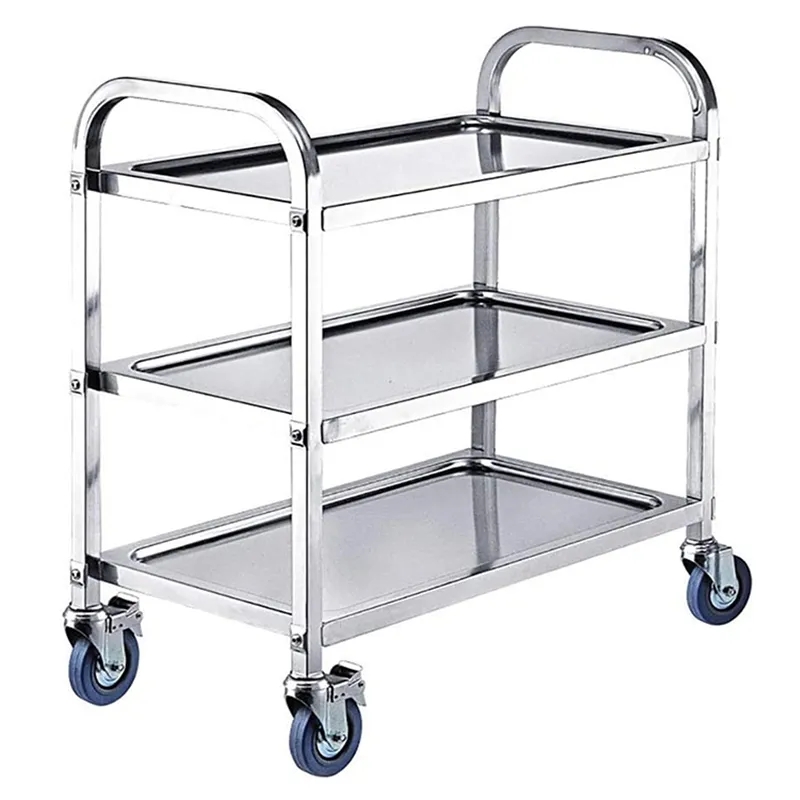
A service cart trolley is a wheeled utility cart designed to transport food, beverages, supplies, or equipment efficiently within commercial and institutional environments. It is commonly used in hotels, restaurants, catering operations, hospitals, schools, and large facilities where staff need to move items quickly and safely across service areas. The primary purpose of a service cart trolley is to reduce manual handling, improve workflow efficiency, and support organized service operations.
In professional foodservice and hospitality settings, a service cart trolley is not just a transport tool. It functions as an essential part of the service system, helping staff maintain speed, hygiene, and consistency during daily operations and peak service periods.
How A Service Cart Trolley Is Used In Daily Operations
A service cart trolley allows staff to move multiple items in one trip, minimizing back-and-forth movement and reducing physical strain. In restaurants and hotels, it is often used to deliver prepared dishes from the kitchen to service areas, clear used tableware, or restock buffet lines. In catering scenarios, carts support large-volume transport of food pans, utensils, and beverages between prep areas and event spaces.
Because these carts are mobile and flexible, they adapt easily to changing layouts, temporary service stations, and multi-room operations. This adaptability makes them especially valuable in environments with frequent layout changes or high guest turnover.
Common Types Of Service Cart Trolleys
Service cart trolleys are available in several configurations, each designed for specific operational needs.
Food service carts typically feature flat or lipped shelves to hold trays, pans, and containers securely during movement. Many are designed to accommodate standardized food pans for seamless integration into existing workflows.
Utility service carts are more general-purpose and are used for transporting cleaning supplies, tools, or maintenance items. These carts often prioritize load capacity and durability over presentation.
Dish clearing carts are commonly used in hotels and banquet halls. They are designed to collect used plates and utensils efficiently while keeping service areas tidy.
Multi-tier service carts feature two or three shelves, allowing staff to separate clean and used items or organize supplies by category.
Materials And Construction Features
Most commercial service cart trolleys are made from stainless steel, plastic, or a combination of both. Stainless steel carts are widely used in foodservice because they offer strong load capacity, corrosion resistance, and easy cleaning. A durable service cart trolley constructed from quality stainless steel can withstand frequent washing, heavy loads, and long-term daily use.
Plastic service carts are lighter and quieter during movement, making them suitable for environments such as hospitals or guest-facing areas where noise reduction is important.
Key construction features buyers often evaluate include:
- Frame strength and load rating
- Shelf thickness and edge design
- Wheel quality and brake function
- Surface finish for hygiene and cleaning
Wheels And Mobility Performance
Mobility is one of the most important aspects of a service cart trolley. High-quality casters allow smooth movement across different floor types, including tile, concrete, and carpet transitions.
Typical configurations include:
- Swivel casters for easy turning in tight spaces
- Lockable wheels to keep the cart stable during loading and unloading
- Non-marking wheels to protect flooring
Stable wheel design directly affects staff safety and service speed, especially when carts are fully loaded.
Applications Across Different Industries
Service cart trolleys are used far beyond traditional restaurants.
In hotels, they support room service delivery, banquet setup, and housekeeping logistics. In catering operations, carts are essential for transporting food pans, chafing equipment, and service tools to event locations. In healthcare and institutional kitchens, carts help maintain hygiene standards while moving meals and supplies efficiently. In commercial facilities, service carts assist with maintenance, storage, and internal logistics.
Because of their versatility, many organizations standardize on a custom service cart trolley design that matches their operational workflow and space constraints.
Selecting The Right Service Cart Trolley
When sourcing service cart trolleys for commercial use, buyers typically consider:
- Intended application and load requirements
- Shelf configuration and spacing
- Material compatibility with hygiene standards
- Ease of cleaning and maintenance
- Long-term durability for repeated use
For project-based procurement, consistency across batches is often a priority. Standardized dimensions and stable production quality help ensure carts perform the same way across different locations and service teams.
Care And Maintenance Best Practices
Proper maintenance extends the life of a service cart trolley:
- Clean surfaces regularly to prevent residue buildup
- Inspect wheels and tighten fittings as needed
- Avoid overloading beyond rated capacity
- Store carts in dry areas when not in use
Routine checks help maintain safety and ensure reliable performance during service.
Conclusion
A service cart trolley is a practical and indispensable tool in professional service environments, designed to improve efficiency, reduce labor strain, and support organized workflows. Its design, material quality, and mobility features directly influence how smoothly daily operations run, especially in high-volume or time-sensitive settings.
If you are planning to source service cart trolleys for hospitality, catering, or institutional use, Yonghao Hardware can support your requirements with stable manufacturing and OEM customization options. Share your application scenario, load needs, and quantity plans, and we can help you develop a solution that fits your operational goals and long-term service strategy.