

A chafing dish is a portable food-warming vessel used to keep prepared dishes at safe serving temperatures during buffets, banquets, catering events, and self-service dining setups. It is designed specifically for temporary food service situations where built-in heating equipment such as steam tables is not available. Chafing dishes rely on indirect heat, usually generated by fuel burners or electric elements, to maintain warmth without direct contact between the heat source and the food.
In commercial foodservice, a chafing dish is not only a serving tool but also part of presentation and service efficiency. Its structure allows food to remain visually appealing while staying warm for extended periods, making it a common choice for hotels, event venues, and large-scale catering operations.
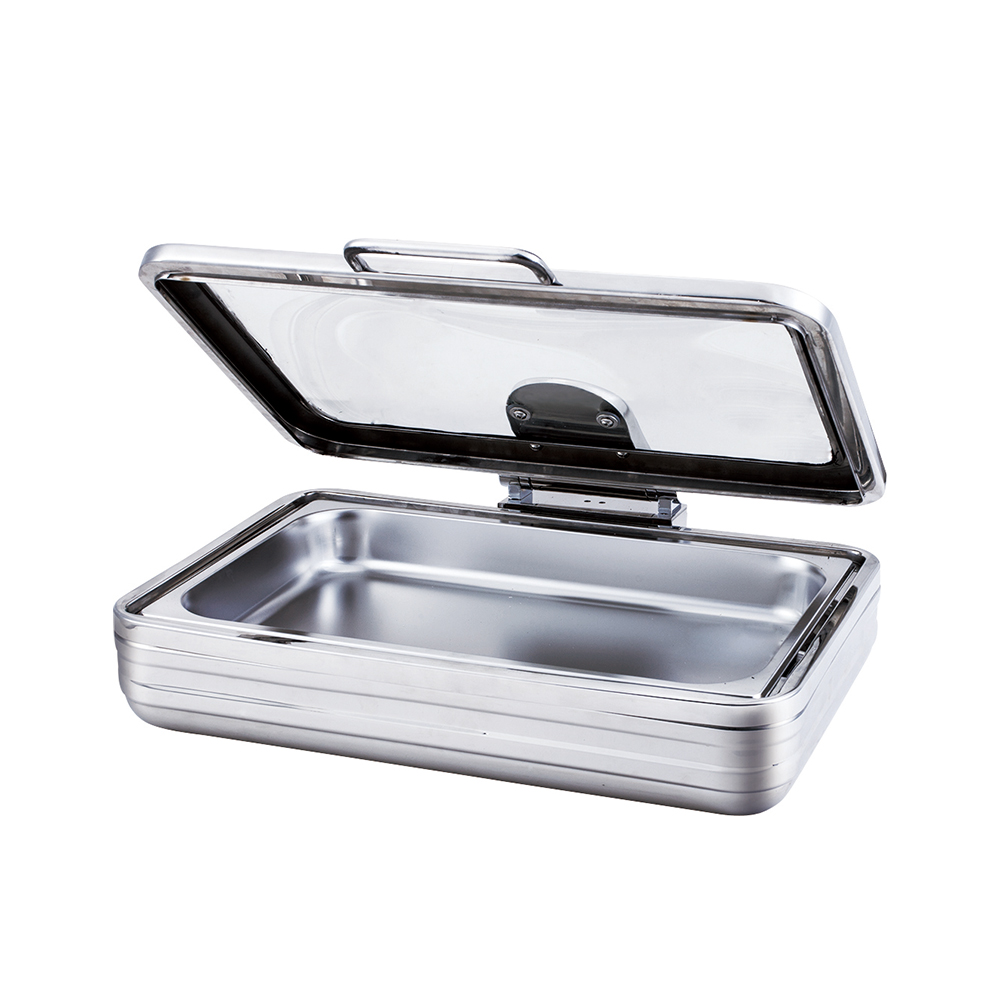
How A Chafing Dish Works
A chafing dish heats food using gentle, consistent indirect heat. The heat source is placed beneath a water pan, which creates steam. This steam transfers heat evenly to the food pan above, reducing the risk of scorching or uneven heating.
The basic heat flow follows this sequence:
- Fuel or electric heat warms the water pan
- Steam rises and distributes heat evenly
- Food remains warm without direct flame exposure
This design makes chafing dishes suitable for holding cooked food rather than cooking raw ingredients. They are intended for temperature maintenance, not food preparation.
Main Components Of A Chafing Dish
A standard chafing dish consists of several coordinated parts that work together during service.
- Frame or stand that supports the full unit and provides stability
- Water pan that holds hot water for steam-based heat transfer
- Food pan that contains the prepared dish
- Lid or cover to reduce heat loss and protect food hygiene
- Heat source such as fuel holders or electric heaters
Because these components are modular, food pans can be swapped quickly during service, allowing continuous operation without interrupting the buffet line.
Common Types Of Chafing Dishes
Chafing dishes are available in several formats to match different service styles.
Rectangular chafing dishes are widely used for main courses and side dishes. They typically accommodate full size or fractional pans and are common in hotel buffets.
Round chafing dishes are often chosen for soups, stews, and single-dish presentations. Their shape helps with heat circulation and visual presentation.
Roll-top chafing dishes feature a hinged lid that opens smoothly and stays in place during service. This design improves guest convenience and reduces lid handling.
Lift-top or removable lid designs are simpler and often used in cost-sensitive or short-duration events.
Materials Used In Chafing Dishes
Most commercial chafing dishes are made from stainless steel due to its heat resistance, corrosion resistance, and ease of cleaning. A durable chafing dish must withstand repeated heating cycles, transportation, and frequent washing without losing shape or surface quality.
Some components may include tempered glass lids or heat-resistant handles for user safety. Material quality directly affects appearance, service life, and maintenance cost.
Typical Applications In Foodservice
Chafing dishes are widely used in scenarios where mobility and flexibility are required.
- Hotel breakfast and dinner buffets
- Wedding and banquet events
- Corporate catering and conference service
- Outdoor and temporary food service setups
- Institutional dining with rotating menus
Because they do not require permanent installation, chafing dishes are ideal for venues that change layouts frequently or serve food in multiple locations.
Chafing Dish Vs Steam Table Pan
While both are used for hot holding, their roles are different.
A steam table pan is designed to fit into built-in steam tables and is commonly used in permanent kitchen or buffet installations. A chafing dish, by contrast, is a self-contained system that includes its own heat source and frame.
In many professional setups, the food pan inside a chafing dish follows standardized sizing, allowing operators to use the same pans across both steam tables and chafing systems. This compatibility improves efficiency and reduces inventory complexity.
Factors To Consider When Choosing A Chafing Dish
For bulk purchasing or project-based sourcing, buyers usually evaluate chafing dishes based on:
- Capacity and pan compatibility
- Heat source type and safety
- Lid design and ease of use
- Structural stability during service
- Long-term durability under repeated use
For catering companies and hospitality groups, selecting a custom chafing dish configuration can help align with branding, service style, and operational workflow.
Cleaning And Maintenance Considerations
Proper maintenance extends the usable life of chafing dishes:
- Allow units to cool before cleaning
- Empty water pans after service to prevent residue buildup
- Use non-abrasive cleaning tools on stainless steel surfaces
- Inspect frames and fuel holders regularly for stability
Consistent care ensures both food safety and presentation quality over time.
Conclusion
A chafing dish is a practical and flexible solution for keeping food warm during buffet-style and temporary food service operations. By using indirect steam heat, it maintains serving temperatures while preserving food quality and appearance. Its modular design, portability, and compatibility with standardized food pans make it an essential tool in catering, hospitality, and event dining environments.
If you are sourcing chafing dishes for a hospitality project or planning a bulk order for long-term service use, Yonghao Hardware can support your needs with stable production and OEM customization options. Share your service scenario, capacity requirements, and material preferences, and we can help you develop a solution that fits your operational goals.